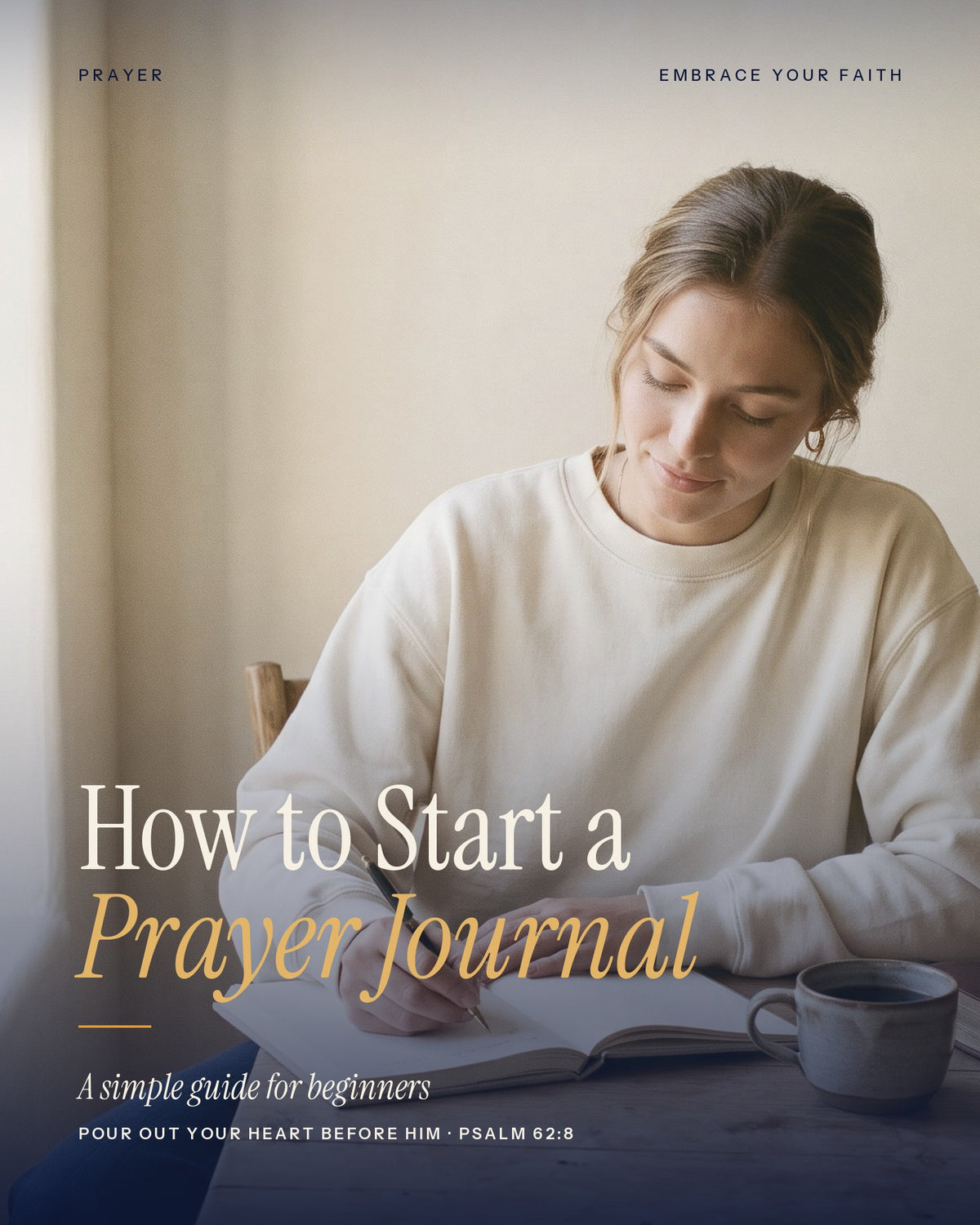
How to Start a Prayer Journal: A Simple Guide for Beginners
Summary: To start a prayer journal, choose a simple notebook or digital journal, pick a regular time, and write honest prayers to God in your own words. Open with a short Scripture passage, use a simple pattern such as ACTS (adoration, confession, thanksgiving, supplication), and keep a list of prayers and answers so you can look back and remember God's faithfulness.
Scripture quotations in this guide are from the King James Version (KJV).
Many people want to pray more consistently but find that their minds wander, their words run dry, or their prayer time quietly disappears from the week. A prayer journal is one of the simplest ways to change that. It slows you down, gives your thoughts a place to land, and over time it becomes a record of a real relationship with God.
You do not need to be a writer, and you do not need a fancy notebook. You only need a willing heart and a place to put your words. This guide shows you how to set one up, simple formats, prompts, and what to do when prayer feels dry.
What is a prayer journal?
A prayer journal is a notebook, app, or document where you write your prayers to God. Some entries are long letters. Some are a few lines. Some are lists of names and needs. Others record a verse that spoke to you and your response to it.
Writing a prayer is still praying. You are speaking to the same Father who hears every whispered word, and the page simply helps you focus. The Psalms themselves are written prayers. David and the other psalmists poured out joy, grief, questions, and praise, and those written words have helped God's people pray for thousands of years.
Trust in him at all times; ye people, pour out your heart before him: God is a refuge for us. Selah.
Psalm 62:8
That is the heart of a prayer journal: a place to pour out your heart before God, trusting that He is a refuge, not a critic.
Why should I keep a prayer journal?
Prayer is a conversation with God, not a writing exercise. So why bring a pen into it? Here are a few reasons many believers find journaling so helpful.
It helps you focus
When you pray silently, it is easy to drift into planning your day or replaying a conversation. Writing keeps your mind on one thought at a time. Your hand moves more slowly than your thoughts, and that slower pace gives you room to listen as well as speak.
It helps you be honest
Some feelings are hard to say out loud, even to God. On the page, you can name your fear, your anger, or your disappointment plainly. God already knows your heart, and honesty with Him is the beginning of real comfort.
It helps you remember
We forget quickly. A prayer that was answered last spring can fade from memory by winter. A journal holds those answers so you can look back and see the hand of God in your life.
I will remember the works of the LORD: surely I will remember thy wonders of old.
Psalm 77:11
Psalm 77 begins in deep distress. The writer feels forgotten. The turning point comes when he chooses to remember what God has done. A prayer journal gives you that same gift: a written memory of God's works in your own story.
What do I need to start a prayer journal?
Keep it simple. Here is all you really need:
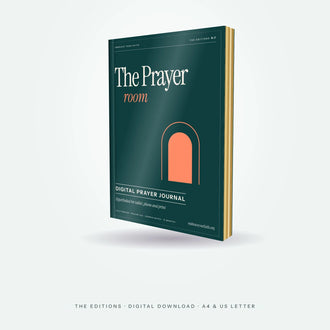
- A journal. Any notebook works. Some people prefer a dedicated prayer journal with prompts and sections already laid out, such as The Prayer Room Digital Prayer Journal.
- A Bible. A printed Bible or a Bible app, so you can begin with Scripture.
- A pen you like. It sounds small, but a pen that writes smoothly makes the habit more inviting.
- A regular time and place. A kitchen table before work, a chair by the window, or your car before you walk into the office.
Jesus taught His disciples to find a quiet place to meet with the Father:
But thou, when thou prayest, enter into thy closet, and when thou hast shut thy door, pray to thy Father which is in secret; and thy Father which seeth in secret shall reward thee openly.
Matthew 6:6
Your "closet" does not have to be a literal room. It is any place where you can shut out distractions and be alone with God for a few minutes. Put your phone face down, open your journal, and begin.
How do I start a prayer journal step by step?
If you have never kept a prayer journal before, try these seven steps for your first week.
- Write a first-page dedication. On the first page, write a short prayer offering this journal to God. Something like, "Lord, teach me to pray. Meet me on these pages." It sets the tone for everything that follows.
- Date every entry. Dates turn your journal into a timeline. Later, you will be grateful to know when you first prayed for something and when the answer came.
- Begin with Scripture. Read a short passage, even just a few verses. Copy one verse that stands out. Starting with God's Word keeps your prayers anchored in who He is.
- Respond honestly. Write what the verse stirs in you. Thank Him, ask questions, or confess what it reveals.
- Bring your requests. Write down what you need and what others need. Be specific.
- Leave space to listen. Sit quietly for a minute or two. If a thought, a verse, or a conviction comes to mind, write it down and test it against Scripture.
- Close with trust. End with a line of surrender, such as "Your will be done," or a simple "Amen."
Start with ten minutes. A short, steady habit will serve you far better than an hour-long session you only manage once.
What should I write in a prayer journal?
There is no single right way to fill the pages. Here are three simple formats. Try each one for a few days and keep the one that helps you most, or mix them through the week.
1. The ACTS method
ACTS is a classic pattern that gives your prayer a gentle shape:
- Adoration: Praise God for who He is. "Lord, You are faithful, patient, and kind."
- Confession: Admit where you have fallen short and receive His forgiveness.
- Thanksgiving: Thank Him for specific gifts, large and small.
- Supplication: Bring your requests for yourself and others.
Philippians 4:6 shows a similar movement, joining our requests with thanksgiving:
Be careful for nothing; but in every thing by prayer and supplication with thanksgiving let your requests be made known unto God.
Philippians 4:6
"Be careful for nothing" means do not be anxious about anything. The very next verse promises that the peace of God, which passeth all understanding, will keep your heart and mind through Christ Jesus. Writing your requests with thanksgiving is a practical way to hand your worries to Him. If anxiety is weighing on you, you may also find comfort in Bible Verses for Anxiety.
2. Scripture-based entries
Read a passage, copy one verse, and turn it into prayer. If you read Lamentations 3, you might copy this:
It is of the LORD's mercies that we are not consumed, because his compassions fail not. They are new every morning: great is thy faithfulness.
Lamentations 3:22-23
Then you write: "Lord, thank You that Your mercy is new this morning. Yesterday did not go well, but You have not run out of compassion for me." Praying Scripture this way teaches you God's language and keeps your prayers rooted in His promises. If you like a structured approach to reading, the SOAP Bible study method pairs beautifully with a prayer journal.
3. The prayer list and answered-prayer log
Set aside a few pages, or a section at the back, for a running list. Make three columns:
- Date you started praying
- Request, written plainly
- Answer, with the date and a short note
Some answers will be a clear yes. Some will be "not yet." Some will be a different answer than you hoped for, which you may only understand later. Recording them all helps you see that God is active, even when His timing differs from yours.
Bless the LORD, O my soul, and forget not all his benefits:
Psalm 103:2
What are some good prayer journal prompts?
When you sit down and your mind goes blank, a prompt can get you started. Choose one and write for five minutes.
- What is one attribute of God I am thankful for today, and why?
- Where did I see God's kindness in the last 24 hours?
- What am I anxious about right now? What would it look like to give it to Him?
- Is there anyone I need to forgive, or ask forgiveness from?
- Who in my life needs prayer today, and what specifically do they need?
- What verse have I read this week that I want to hold on to?
- What decision am I facing, and what do I know from Scripture that applies to it?
- Where do I feel weak, and how might God's strength meet me there?
- What prayer has God answered recently that I have not thanked Him for?
- What do I want my relationship with God to look like a year from now?
You can also pray through famous prayers recorded in Scripture, such as Hannah's prayer, David's prayer of repentance in Psalm 51, or the Lord's Prayer. Our guide to prayers in the Bible gives you twelve examples to explore.
How often should I write in my prayer journal?
Daily is a wonderful goal, but it is not a rule. Some people write every morning. Others write three or four times a week and pray without writing on other days. What matters most is consistency and sincerity, not a perfect streak.
Pray without ceasing.
1 Thessalonians 5:17
Paul's short command reminds us that prayer is meant to be a continual conversation, not a single appointment. Your journal is one part of that conversation. You will still pray in the car, at work, and before you fall asleep. The journal simply gives those prayers a home and a memory.
What if prayer journaling feels dry or I do not know what to say?
Every believer goes through seasons when prayer feels flat. The words seem to bounce off the ceiling, and opening the journal feels like a chore. That does not mean you are doing it wrong, and it does not mean God has stopped listening. Here are a few gentle ways to keep going. For more on why prayer matters, read Why Is Prayer Important?
Write the dryness down
Be honest about it. "Lord, I do not feel much today. I am tired and distracted. But I am here." The psalmists did exactly this:
Why art thou cast down, O my soul? and why art thou disquieted in me? hope thou in God: for I shall yet praise him for the help of his countenance.
Psalm 42:5
Notice that the psalmist speaks to his own soul and points it back to hope. You can do the same on the page.
Lean on the Holy Spirit
You are never praying alone. Scripture promises that the Spirit helps us when we do not know what to say:
Likewise the Spirit also helpeth our infirmities: for we know not what we should pray for as we ought: but the Spirit itself maketh intercession for us with groanings which cannot be uttered.
Romans 8:26
On the hardest days, a single sentence such as "Holy Spirit, pray for me" is a real and meaningful prayer.
Copy Scripture instead of writing your own words
When your own words run out, borrow God's. Copy a psalm slowly, line by line, and make it your prayer. Psalms 23, 46, 91, and 139 are good places to begin.
Change your setting or format
Sometimes a small change helps: pray outside, try a new prompt, or switch from long entries to a simple list for a week. A guided resource can also give you fresh direction. Women who want a structured month of Scripture and reflection may enjoy the Peace That Keeps 30-Day Devotional.
A prayer to begin your prayer journal
If you are not sure how to write your first entry, you are welcome to copy this prayer onto your first page.
Father, thank You that You hear me. As I begin this journal, teach me to pray. Help me to be honest with You, to listen for Your voice in Your Word, and to remember all that You have done. When I feel weak or dry, remind me that Your Spirit prays with me and that Your mercies are new every morning. Search my heart, lead me in Your way, and let these pages become a story of Your faithfulness. In Jesus' name, amen.
Frequently asked questions
Is it biblical to write down my prayers?
Yes. Many prayers in the Bible were written down, including the Psalms, the prayers of Paul in his letters, and Hannah's song in 1 Samuel 2. In Habakkuk 2:2, the Lord told the prophet to write the vision and make it plain. Writing your prayers is a natural way to focus your heart and remember God's work.
What is the best way to start a prayer journal as a beginner?
Start small. Choose a notebook, set aside ten minutes, read a few verses, and write a short prayer using the ACTS pattern: adoration, confession, thanksgiving, and supplication. Date each entry and keep a list of requests and answers at the back.
Can I use a digital prayer journal instead of a notebook?
Absolutely. A digital journal works well if you prefer typing, want to keep entries private with a passcode, or like having prompts already laid out. What matters is a sincere heart, not the format.
What should I do if I miss days in my prayer journal?
Simply begin again. There is no need to catch up or feel guilty. Write today's date and talk to God about where you are right now. Consistency grows over time through grace, not pressure.
How is a prayer journal different from a regular diary?
A diary records your thoughts and events. A prayer journal is addressed to God. It includes Scripture, praise, confession, requests, and a record of answered prayer. The focus moves from "what happened to me" to "what is God doing, and how can I respond to Him?"
Keep going deeper
- How to Pray: A Simple Guide for Beginners and Believers
- How to Pray Effectively: 10 Biblical Tips for Heartfelt Prayer
- The SOAP Bible Study Method: A Simple Guide with Example
- Prayers in the Bible: 12 Powerful Examples to Inspire Your Prayers
- How to Hear God's Voice: A Simple Biblical Guide
- The Names of God and What They Mean: 15 Names From Scripture