The Names of God and What They Mean: 15 Names From Scripture
Summary: The names of God in the Bible reveal who He is and how He cares for His people. Elohim points to God as the mighty Creator, YHWH (the LORD) to His faithful, covenant presence, El Shaddai to His all-sufficient power, and Jehovah Jireh to His provision. In Jesus, called Immanuel, "God with us," these names come close enough to know.
Scripture quotations in this guide are from the King James Version (KJV).
In the Bible, a name is more than a label. It often describes a person's nature or marks a moment that changed everything. When God reveals a new name, or when His people give Him a name after He rescues them, they are telling us something true about who He is. Learning these names is one of the most practical ways to grow in prayer, trust and worship.
This guide walks through 15 names of God from Scripture, what each one means in plain language, where it appears, and how it can shape the way you pray today.
Why does God have so many names in the Bible?
God is one God, but no single word can hold all that He is. Each name works like a window into a different part of His character. One name shows His power. Another shows His nearness. Another shows His care when we are hurting or lost.
Scripture also invites us to treat God's name with honor. Jesus taught His followers to begin prayer this way:
"After this manner therefore pray ye: Our Father which art in heaven, Hallowed be thy name."
Matthew 6:9
To hallow God's name is to treat it as holy and to want His true character known in the world. Learning His names is part of that.
What does Elohim mean?
Elohim is the first name for God in the Bible, and it appears in the very first sentence:
"In the beginning God created the heaven and the earth."
Genesis 1:1
Elohim is usually understood to speak of God as the mighty one, the Creator who has power over all things. It is a common Hebrew word for God, and it is used throughout the Old Testament. In Genesis 1, Elohim speaks and light appears, land rises, and life fills the earth.
What does YHWH (the LORD) mean?
When you see LORD in small capital letters in the KJV, it usually stands for the Hebrew name YHWH. This is God's personal, covenant name. Out of reverence, Jewish readers traditionally did not say it aloud, and its exact original pronunciation is uncertain. Older English Bibles render it in a few places as JEHOVAH, and many scholars today write it as Yahweh.
The name is closely linked to the moment God spoke to Moses from the burning bush:
"And God said unto Moses, I AM THAT I AM: and he said, Thus shalt thou say unto the children of Israel, I AM hath sent me unto you."
Exodus 3:14
YHWH is connected to the Hebrew verb "to be." It points to a God who simply is: eternal, unchanging, and faithful to His promises.
What does "I AM" mean, and how does Jesus use it?
"I AM" is not only an Old Testament name. Jesus used the same words about Himself in a moment that shocked His listeners:
"Jesus said unto them, Verily, verily, I say unto you, Before Abraham was, I am."
John 8:58
Jesus did not say "Before Abraham was, I was." He said "I am," echoing the name God gave at the burning bush. Christians across traditions understand this as Jesus speaking of His eternal, divine identity. You can read more about this in our guide Who Is Jesus? What the Bible Says and Why It Matters.
What does Adonai mean?
Adonai means "Lord" or "Master." In the KJV it usually appears as "Lord" with only the first letter capitalized. It speaks of God's rightful authority over our lives. Psalm 8 places both names side by side:
"O LORD our Lord, how excellent is thy name in all the earth!"
Psalm 8:1
The first "LORD" is YHWH, the covenant God. The second "Lord" is Adonai, the Master. Together they say: the faithful God who made promises to us is also the One we gladly serve.
What does El Shaddai mean?
El Shaddai is usually translated "God Almighty" or "the Almighty God." The KJV uses that wording when God appears to Abram:
"And when Abram was ninety years old and nine, the LORD appeared to Abram, and said unto him, I am the Almighty God; walk before me, and be thou perfect."
Genesis 17:1
God revealed this name to a man who was 99 years old and still waiting for a promised son. The meaning of the word Shaddai is debated by scholars, but the context is clear: El Shaddai is the God whose power is enough when human strength has run out. The same name brings comfort in Psalm 91:
"He that dwelleth in the secret place of the most High shall abide under the shadow of the Almighty."
Psalm 91:1
What does El Elyon mean?
El Elyon means "God Most High." It first appears when the priest-king Melchizedek meets Abram:
"And Melchizedek king of Salem brought forth bread and wine: and he was the priest of the most high God."
Genesis 14:18
This name reminds us that no ruler, power or problem sits above God.
What does El Roi mean?
El Roi means "the God who sees me." It is one of the most tender names in Scripture, and it was given by Hagar, an Egyptian servant who had run into the wilderness, alone and mistreated. The angel of the LORD found her there and spoke to her by name.
"And she called the name of the LORD that spake unto her, Thou God seest me: for she said, Have I also here looked after him that seeth me?"
Genesis 16:13
Hagar was not famous or powerful, yet she is the one who named God. That says something lovely about Him. He notices the overlooked. If you feel unseen, this name is for you.
What does Jehovah Jireh mean?
Jehovah Jireh (written as one word, Jehovahjireh, in the KJV) means "the LORD will provide" or "the LORD will see to it." Abraham gave this name to the mountain where God provided a ram in place of his son Isaac:
"And Abraham called the name of that place Jehovahjireh: as it is said to this day, In the mount of the LORD it shall be seen."
Genesis 22:14
Christians have long seen this story as a picture pointing ahead to Jesus, the provision God Himself made for our greatest need. Jehovah Jireh is not a promise that we will get everything we want. It is a promise that God sees ahead and will provide what is truly needed.
What does Jehovah Rapha mean?
Jehovah Rapha means "the LORD who heals." Soon after the Israelites left Egypt, God turned bitter water sweet and then made a promise that ends with these words: "for I am the LORD that healeth thee" (Exodus 15:26).
God's healing in Scripture reaches the whole person: body, heart, relationships and soul. Sometimes it comes quickly, sometimes slowly, and sometimes fully only in eternity. If you are carrying worry alongside pain, our guide to Bible verses for anxiety may help.
What does Jehovah Nissi mean?
Jehovah Nissi means "the LORD is my banner." After Israel's victory over Amalek, Moses built an altar:
"And Moses built an altar, and called the name of it Jehovahnissi:"
Exodus 17:15
In the ancient world, a banner was a flag raised high so an army knew where to gather and whom they belonged to. Calling God our banner means He is our rallying point. The victory is His, and we stand under His name.
What does Jehovah Shalom mean?
Jehovah Shalom means "the LORD is peace." Gideon gave this name when he was afraid. He had just realized he had seen the angel of the LORD, and God told him not to fear. Gideon responded with worship:
"Then Gideon built an altar there unto the LORD, and called it Jehovahshalom: unto this day it is yet in Ophrah of the Abiezrites."
Judges 6:24
The Hebrew word shalom means more than quiet. It speaks of wholeness, wellbeing and things being made right. God's peace is not just the absence of trouble. It is the presence of God in the middle of it. For more on that, see What Does the Bible Say About Fear?
What does Jehovah Raah mean?
Jehovah Raah (also written Jehovah Rohi) means "the LORD is my shepherd," from the most loved psalm in the Bible:
"The LORD is my shepherd; I shall not want."
Psalm 23:1
A shepherd leads, feeds, protects and goes looking for the one who wanders off. David, who had been a shepherd himself, knew that sheep cannot care for themselves. This name is an invitation to be led. Jesus later said, "I am the good shepherd" (John 10:11), taking this name to Himself.
What does Jehovah Tsidkenu mean?
Jehovah Tsidkenu means "the LORD our righteousness." It comes from a promise about a coming King from David's line:
"In his days Judah shall be saved, and Israel shall dwell safely: and this is his name whereby he shall be called, THE LORD OUR RIGHTEOUSNESS."
Jeremiah 23:6
This name carries the heart of the gospel. We cannot make ourselves right with God by trying harder. Christians believe God gives His righteousness as a gift through Jesus, the King this promise points to. It is a truth Christians across traditions hold in common, as we explain in What All Christians Agree On.
What does Immanuel mean?
Immanuel means "God with us." Isaiah first gave the promise (Isaiah 7:14), and Matthew shows it fulfilled in the birth of Jesus. The KJV spells it "Immanuel" in Isaiah and "Emmanuel" in Matthew:
"Behold, a virgin shall be with child, and shall bring forth a son, and they shall call his name Emmanuel, which being interpreted is, God with us."
Matthew 1:23
Every other name on this list tells us what God is like. Immanuel tells us how close He came. In Jesus, the Creator, the Almighty, the Shepherd and the Healer stepped into our world and lived among us.
What does Abba, Father mean?
Abba is an Aramaic word for father, used with warmth and closeness. Jesus prayed this way in Gethsemane (Mark 14:36), and Paul says that believers, by the Spirit, are able to cry, "Abba, Father" (Romans 8:15).
This may be the most surprising name of all. The God Most High, whose name Israel would not say aloud, invites His children to call Him Father. If you want to begin that kind of relationship, read How to Know Jesus Personally.
What names of Jesus are in Isaiah 9:6?
Centuries before Bethlehem, Isaiah gave a cluster of names for the promised child:
"For unto us a child is born, unto us a son is given: and the government shall be upon his shoulder: and his name shall be called Wonderful, Counsellor, The mighty God, The everlasting Father, The Prince of Peace."
Isaiah 9:6
- Wonderful, Counsellor: His wisdom is beyond ours, and He guides with perfect understanding.
- The mighty God: This child is not only a good teacher. He is God.
- The everlasting Father: He cares for His people with lasting, protective love.
- The Prince of Peace: He makes peace between us and God, and He brings peace into our hearts.
Some believers like to wear these names as a quiet reminder through the week, like our Prince of Peace jersey.
How can I use the names of God in prayer?
Knowing the names is a good start. Praying them is where they come alive. Here are a few simple ways to begin:
- Match the name to your need. Worried about money? Pray to Jehovah Jireh. Feeling invisible? Pray to El Roi. Anxious? Pray to Jehovah Shalom.
- Take one name a day. Read the passage where it appears, write down one thing it shows you about God, and pray it back to Him.
- Keep a names journal. Note the times God has shown Himself as provider, healer or shepherd in your own life.
- Memorize one verse. Proverbs 18:10 is a good place to start.
"The name of the LORD is a strong tower: the righteous runneth into it, and is safe."
Proverbs 18:10
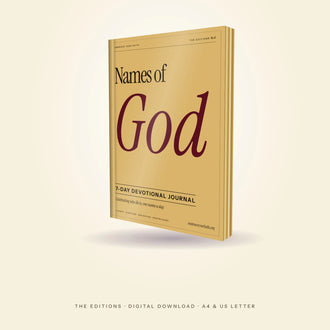
If you would like a guided way to do this, the Names of God 7-Day Devotional Journal walks you through one name each day with Scripture, reflection and space to write. For more on building a prayer rhythm, see our simple guide to prayer.
A prayer using the names of God
Elohim, You made the heavens and the earth, and You made me. LORD, You are the great I AM, faithful and unchanging. El Shaddai, You are enough when I am not. El Roi, You see me. Jehovah Jireh, provide what I need today. Jehovah Rapha, heal what is broken in me. Jehovah Shalom, fill me with Your peace. My Shepherd, lead me. Thank You, Jesus, Immanuel, for coming close. Abba, Father, I rest in Your love. Amen.
Frequently asked questions
What is the most common name for God in the Bible?
The personal name YHWH, shown as LORD in small capitals in the KJV, is the most frequent name for God in the Old Testament. It appears thousands of times. Elohim is also very common.
Is Jehovah God's real name?
"Jehovah" is an older English rendering of the Hebrew name YHWH. Because the original vowels were not preserved in writing, scholars are not certain how it was first pronounced. Many prefer Yahweh. Either way, it refers to God's personal covenant name, and the KJV mostly renders it as LORD.
Why is LORD sometimes in capital letters?
In the KJV, LORD in small capitals stands for YHWH, while "Lord" with lowercase letters usually translates Adonai, meaning master. This helps readers see which Hebrew word is behind the English.
How many names of God are there?
There is no single official count. Depending on how titles and descriptions are counted, lists range from a handful to more than a hundred. The 15 in this guide are among the best known and most loved.
Keep going deeper
- Who Is Jesus? What the Bible Says and Why It Matters
- What All Christians Agree On: The Core Beliefs of the Christian Faith
- Who Is the Holy Spirit? A Beginner's Guide
- Prayers in the Bible: 12 Powerful Examples to Inspire Your Prayers
- By His Stripes We Are Healed: Isaiah 53:5 Meaning
- How to Start a Prayer Journal: A Simple Guide for Beginners