The SOAP Bible Study Method: A Simple Guide with Example
Summary: The SOAP Bible study method is a simple four-step journaling format: Scripture (write out a verse that stands out), Observation (note what it says and reveals about God), Application (write how it applies to your life today) and Prayer (respond to God in a short written prayer). It takes about fifteen minutes, works with any passage and helps you move from reading the Bible to living it.
Scripture quotations in this guide are from the King James Version (KJV).
Many Christians want to spend time in the Bible every day but are not sure what to do once they open it. They read a chapter, close the book and realize five minutes later that they cannot remember a word. The SOAP method solves that problem with a pen, a notebook and four simple headings.
SOAP is often credited to pastor Wayne Cordeiro, who popularized it in his book The Divine Mentor, and it is now used in churches and small groups around the world. It is easy enough for a new believer and deep enough for someone who has followed Jesus for decades. This guide explains each step, walks through a full worked example and answers the most common questions. For the bigger picture of Bible study, including other methods and a 7-day plan, see our guide on how to study the Bible.
What does SOAP stand for in Bible study?
- S: Scripture. Read a passage, then write out by hand the verse or short section that stood out to you.
- O: Observation. Write what you notice. What is happening? What does it reveal about God, about people, about the way of Jesus?
- A: Application. Write how this truth applies to your life today, as specifically as you can.
- P: Prayer. Write a short prayer responding to God about what you read.
Each letter becomes a heading in your journal. In fifteen to twenty minutes you end up with a page you can return to, and over months those pages become a record of how God has spoken to you through His word.
Why does the SOAP method work?
SOAP works because it slows you down. Writing a verse by hand forces you to notice every word. Observation keeps you anchored in what the text actually says before you decide what it means to you. Application turns knowledge into action, and prayer turns study into conversation with God.
That is the pattern Scripture itself describes. God told Joshua to keep His word close and meditate on it "that thou mayest observe to do according to all that is written therein" (Joshua 1:8). James puts it plainly: "But be ye doers of the word, and not hearers only, deceiving your own selves" (James 1:22). SOAP gives every quiet time a built-in "doing" step.
How do you do the SOAP Bible study method step by step?
Before you start: choose a passage and pray
Pick a book of the Bible and read a short passage each day, about one chapter or less. A Gospel, Psalms, Proverbs or a short letter such as Philippians or James is a good place to begin. Before you read, ask God to help you understand: "Open thou mine eyes, that I may behold wondrous things out of thy law" (Psalm 119:18).
Step 1: Scripture
Read the passage slowly, once or twice. As you read, notice which verse catches your attention. It may encourage you, confuse you or convict you. Write that verse out in full at the top of the page, with the reference and the date. Do not rush this step. Many people find that writing the words is where God first begins to speak.
Step 2: Observation
Now ask what the verse says. Who is speaking, and to whom? What comes before and after it? Are there repeated words, commands, promises or warnings? What does it show you about God's character? Write down three or four simple observations. Resist the temptation to jump straight to how you feel about it. Good observation protects you from reading your own ideas into the text.
Step 3: Application
Ask, "Lord, what do You want me to believe, change or do because of this?" Then write a specific answer. "I should trust God more" is a start, but "I will stop rehearsing tomorrow's meeting tonight and give it to God in prayer instead" is something you can actually do. Application is personal, so write in the first person.
Step 4: Prayer
Finish by writing a short prayer. Thank God for what you learned, confess where you have fallen short and ask for His help to live it out. Two or three sentences are enough. This turns your study into a real conversation. If you would like ideas for praying Scripture back to God, see our guide on how to pray effectively.
What does a SOAP Bible study example look like?
Here is a complete SOAP journal entry based on Proverbs 3:5-6.
S: Scripture
"Trust in the LORD with all thine heart; and lean not unto thine own understanding. In all thy ways acknowledge him, and he shall direct thy paths." (Proverbs 3:5-6)
O: Observation
- This is a command to trust the LORD with all my heart, not part of it.
- Trusting God is set against leaning on my own understanding. I cannot fully do both.
- "In all thy ways" means every area of life, not only the spiritual parts.
- There is a promise attached: He shall direct my paths.
A: Application
I have been trying to work out my next career step entirely on my own and losing sleep over it. This week I will bring the decision to God in prayer each morning before I look at job listings, and I will ask two mature Christian friends for counsel instead of deciding alone.
P: Prayer
Lord, I confess I have been leaning on my own understanding. I want to trust You with all my heart, including my work and my future. Show me the next step, and give me peace while I wait for it. Amen.
That is all it takes. You can read a fuller explanation of this passage in our guide to Proverbs 3:5-6.
What do you need for SOAP Bible study?
- A Bible. Any translation you understand. Many people use the King James Version for close study.
- A journal or notebook. Writing by hand helps you remember. A free printable option is our Abide prayer journal and planner, and The Prayer Room digital prayer journal works well on a tablet.
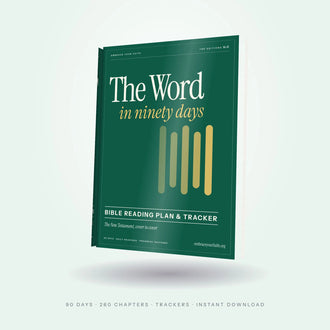
- A reading plan. Knowing tomorrow's passage removes a daily decision. The Word in Ninety Days takes you through the New Testament with a simple tracker.
- Fifteen quiet minutes. The same time each day helps the habit stick.
Can you use the SOAP method in a small group?
Yes, and it works well. Agree on a passage for the week, have everyone do their own SOAP entries at home, then meet to share. Ask each person which verse they chose and why, then read observations aloud. Applications are often the most powerful part of the conversation, because they show how the same passage meets different people in different places. Close by praying for one another's applications. Our article on the power of group prayer has ideas for that time.
Common mistakes with the SOAP method
- Choosing a verse without reading the passage. Read the whole section first so your verse stays in context.
- Skipping observation. Jumping from Scripture straight to application can lead you to make the verse say what you want.
- Vague applications. Aim for one concrete step you can take in the next week.
- Treating it as a checklist. SOAP is a tool for meeting God, not a box to tick. If one entry is short, that is fine.
- Quitting after a missed day. Pick up where you left off. Consistency over months matters more than a perfect streak.
A prayer before you begin
Father, thank You for speaking to us through Your word. As I open it today, slow me down so I can listen. Show me what is really there, help me understand it, and give me courage to live it. Let this time with You shape the rest of my day. In Jesus' name, Amen.
Frequently asked questions
What is the SOAP method of Bible study?
It is a four-step journaling method: write out a Scripture verse, record your Observations, write a personal Application and finish with a written Prayer. It helps you read slowly, understand the text and put it into practice.
Who created the SOAP Bible study method?
It is commonly credited to pastor Wayne Cordeiro, who popularized it in his book The Divine Mentor. Many churches and ministries now teach it in their own words.
How long should a SOAP Bible study take?
About fifteen to twenty minutes is typical: a few minutes to read, then a few minutes for each heading. You can go longer, but a short daily habit is more valuable than an occasional long session.
What part of the Bible is best for SOAP?
Almost any passage works. Beginners often start with a Gospel such as John or Mark, Psalms, Proverbs or a short letter like Philippians or James. If you are unsure, read our guide on where to start reading the Bible.
What is the difference between SOAP and inductive Bible study?
Inductive study works through observation, interpretation and application in depth, often across a whole passage. SOAP is a shorter daily format focused on one verse, with prayer built in. Many people use SOAP daily and inductive study for deeper weekly study.