How to Hear God's Voice: A Simple Biblical Guide
Summary: You hear God's voice most clearly through the Bible, which is His sure and written Word. The Holy Spirit then helps you understand it, brings it to mind, and gives an inner witness of peace. Wise counsel and circumstances can confirm His leading. Test every impression against Scripture, stay humble, and keep listening in prayer with an open, willing heart.
Scripture quotations in this guide are from the King James Version (KJV).
Many believers carry a quiet ache: "I want to hear from God, but I am not sure I ever have." Maybe you have heard friends say "the Lord told me" and wondered what was wrong with you. Maybe you are facing a decision and long for clear direction. If that is you, take heart. God is not hiding from you. He is a speaking God, and He delights to be known by His children.
This guide walks through what the Bible says about hearing God's voice, how to tell it from your own thoughts, and simple habits that help you listen.
Does God still speak to people today?
Yes. From the first page of the Bible to the last, God is a God who speaks. He spoke the world into being. He spoke to Abraham, Moses, the prophets and the apostles. And the New Testament makes clear that His speaking reached its fullest point in Jesus.
"God, who at sundry times and in divers manners spake in time past unto the fathers by the prophets, Hath in these last days spoken unto us by his Son."
Hebrews 1:1-2
Jesus is God's clearest Word to us. Everything God says to you today will look like Jesus, sound like Jesus and lead you toward Jesus. Hearing God is not reserved for a few spiritual experts. It is part of ordinary life for every person who belongs to Christ.
"My sheep hear my voice, and I know them, and they follow me."
John 10:27
Notice what Jesus says here. He does not say, "Some of My sheep might hear My voice if they work hard enough." He says His sheep hear. Hearing God is a promise to His people, and it grows over time, the way a sheep learns its shepherd's voice by spending days near him.
What is the main way God speaks to us?
The main and most reliable way God speaks is through the Bible. Scripture is not a second-best substitute for "really" hearing from God. It is God's own voice in written form, and it is the standard by which every other impression must be measured.
"All scripture is given by inspiration of God, and is profitable for doctrine, for reproof, for correction, for instruction in righteousness."
2 Timothy 3:16
The phrase "given by inspiration of God" means God breathed it out. When you open your Bible, you are not reading old religious opinions. You are hearing the God who spoke then and still speaks through those same words now. If you want to hear God's voice more, the single most helpful step is to read His Word more, with an expectant heart.
The psalmist describes Scripture as practical guidance for real life:
"Thy word is a lamp unto my feet, and a light unto my path."
Psalm 119:105
A lamp shows you the next step, not always the whole road. Often God's voice works like that. You read a passage in the morning, and a phrase stays with you all day. A verse you memorized years ago comes back at the exact moment you need it. That is God speaking. If you are not sure where to begin reading, our guide on where to start reading the Bible offers a simple path, and how to study the Bible will help you go deeper.
How does the Holy Spirit help us hear God?
Before Jesus went to the cross, He promised His followers that they would not be left alone. The Holy Spirit would come to live within them, teach them and guide them.
"Howbeit when he, the Spirit of truth, is come, he will guide you into all truth."
John 16:13
The Spirit does not compete with Scripture. He is the one who inspired it, and He is the one who opens our eyes to understand it. When a verse suddenly feels alive and personal, that is the Spirit's work. When you sense conviction about a sin, or comfort in a hard season, or a gentle nudge to reach out to someone, the Spirit is often at work there too.
The Spirit also gives believers a deep inner assurance about who they are:
"The Spirit itself beareth witness with our spirit, that we are the children of God."
Romans 8:16
This is one of the most important things God says to you: you are His child. Before you ask God for directions about a job, a move or a relationship, let Him speak this first and foundational word over your life. You can learn more about the Spirit's role in our beginner's guide, Who Is the Holy Spirit?
What does God's voice sound like?
People sometimes expect God to speak only in dramatic ways. The story of the prophet Elijah gently corrects that idea. Exhausted and discouraged, Elijah went to Mount Horeb, and God met him there.
"And, behold, the LORD passed by, and a great and strong wind rent the mountains, and brake in pieces the rocks before the LORD; but the LORD was not in the wind: and after the wind an earthquake; but the LORD was not in the earthquake: And after the earthquake a fire; but the LORD was not in the fire: and after the fire a still small voice."
1 Kings 19:11-12
God can do mighty things, but here He chose a quiet whisper. That is still often how He speaks. His voice tends to be:
- Consistent with Scripture. God will never tell you to do something His Word calls sin.
- Christ-centered. His voice draws you toward Jesus, not toward pride or self-promotion.
- Peaceful, even when it is hard. God may call you to something difficult, but His voice does not produce frantic confusion.
- Clear in conviction, never crushing in condemnation. The Spirit shows you sin so you can turn and be restored, not so you will feel worthless.
- Patient. God's leading rarely demands that you act in a panic this very second.
"For God is not the author of confusion, but of peace."
1 Corinthians 14:33
What can we learn from Samuel about listening?
One of the most tender stories in the Bible is the call of young Samuel in 1 Samuel 3. Samuel served in the house of the Lord under the old priest Eli. One night he heard someone call his name. Three times he ran to Eli, thinking the priest had called him. Samuel did not yet recognize the Lord's voice.
Eli finally understood what was happening and told Samuel how to respond. The next time, Samuel did just that:
"And the LORD came, and stood, and called as at other times, Samuel, Samuel. Then Samuel answered, Speak; for thy servant heareth."
1 Samuel 3:10
This story offers three simple lessons:
- It is normal not to recognize God's voice at first. Samuel was not doing anything wrong. He simply had not learned yet.
- Mature believers can help us. Eli helped Samuel discern what was going on. God often uses wise Christians to help us listen.
- The heart posture matters. "Speak; for thy servant heareth" is the prayer of someone ready to obey. God loves to speak to a willing heart.
You can pray Samuel's words tonight. They are a beautiful way to begin any time of prayer.
How do I know if it is God or just my own thoughts?
This is perhaps the most common question believers ask, and it is a wise one. Not every thought, feeling or impression comes from God. Our own desires, fears and the voices around us can all feel convincing. Scripture tells us to test what we sense.
"Beloved, believe not every spirit, but try the spirits whether they are of God: because many false prophets are gone out into the world."
1 John 4:1
"Prove all things; hold fast that which is good."
1 Thessalonians 5:21
Here are some simple questions to ask when you sense God may be leading you:
- Does it agree with the Bible? This is the first and final test. If an impression contradicts Scripture, it is not from God, no matter how strong it feels.
- Does it reflect the character of Jesus? Is it loving, humble, truthful and pure?
- Is it confirmed by mature believers? Share what you sense with a pastor or trusted Christian friend.
- Does it bring the peace of God over time? Not always comfort, but a settled peace that grows as you pray.
- Does it serve God's glory and others' good, or mainly my own wants?
The Bible also places great value on godly advice:
"Where no counsel is, the people fall: but in the multitude of counsellors there is safety."
Proverbs 11:14
Testing is not a sign of weak faith. It is an act of love for God and respect for His Word.
Does God speak through circumstances and other people?
Yes, though these are best seen as ways God confirms His Word rather than as replacements for it. God is sovereign over the details of your life. Open and closed doors, a timely sermon, a friend's encouraging message, or a conversation that echoes what you read that morning can all be part of how He guides you.
Circumstances can be read in many ways, so weigh them alongside Scripture, prayer and wise counsel. When these line up, you can move forward with confidence. When they do not, it is often wise to wait.
When you lack clarity, God invites you to ask:
"If any of you lack wisdom, let him ask of God, that giveth to all men liberally, and upbraideth not; and it shall be given him."
James 1:5
"Upbraideth not" means God will not scold you for asking. He is glad when you come to Him for wisdom.
How can I practice hearing God's voice every day?
Hearing God is less like a lightning strike and more like a friendship that deepens over time. These simple habits can help you grow:
- Read Scripture daily, slowly. Choose a short passage. Read it twice. Ask, "Lord, what are You saying to me here?" A method like SOAP Bible study gives this a helpful shape.
- Make room for silence. Turn off the noise for a few minutes. Many of us never hear the still small voice because we never stop talking.
- Pray honestly, then listen. Prayer is a conversation. After you speak, pause. Sit quietly before the Lord and let a verse or a thought rise. Our simple prayer guide and tips for praying effectively can help.
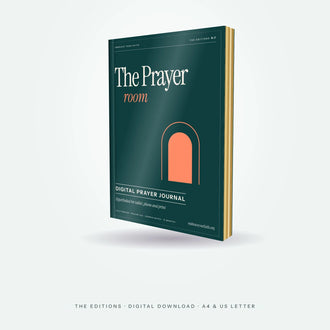
- Write it down. Keep a record of verses that stand out, prayers you pray and the ways God answers. Over months, you will begin to see patterns of His faithfulness. The Prayer Room Digital Prayer Journal gives you a simple, guided place to do this.
- Obey what you already know. God often gives fresh light to those who walk in the light they already have. If He has shown you a step, take it.
- Stay connected to a church. God speaks through preaching, worship and fellowship. Listening is easier when you are not alone.
"Be still, and know that I am God."
Psalm 46:10
What if I feel like God is silent?
Seasons of silence are real, and the Bible is honest about them. Many of the psalms are prayers from people who felt God was far away. If that is where you are, you are in good company, and you are not forgotten.
A few gentle encouragements:
- Silence is not absence. God has promised to be with His people. Feelings rise and fall, but His presence does not.
- Return to what He has already said. His promises are still true today.
- Check for anything in the way. Sometimes unconfessed sin or unforgiveness dulls our hearing. Confess it simply and receive His mercy.
- Keep showing up. Faithfulness in quiet seasons often prepares us for clearer seasons ahead.
"Call unto me, and I will answer thee, and shew thee great and mighty things, which thou knowest not."
Jeremiah 33:3
God may not answer on our timeline or in the way we expect, but He does hear, and He does answer. If anxiety is part of what you are feeling, our collection of Bible verses for anxiety may bring comfort.
A prayer for ears to hear
Lord Jesus, You are the Good Shepherd, and I want to know Your voice. Thank You for speaking through Your Word and for giving me Your Holy Spirit. Quiet the noise in my heart. Help me read the Bible with expectation, test what I sense with humility, and obey what You show me with joy. When You seem silent, help me trust what You have already said. Speak, Lord, for Your servant is listening. Amen.
If you would like others to pray with you as you seek God's direction, you can share a request through our prayer request form.
Frequently asked questions
Can God speak to me out loud?
God is able to do anything, and the Bible records times He spoke audibly. But for most believers, most of the time, God speaks through Scripture, applied to the heart by the Holy Spirit. An audible voice is not the measure of a close relationship with God, and any message, however it comes, must agree with the Bible.
How do I know if a dream is from God?
God used dreams at times in the Bible, but dreams can also come from our own minds. Treat a dream the way you would treat any impression: test it against Scripture, pray about it, and seek wise counsel. Never make a major decision based on a dream alone.
Why can't I hear God's voice?
Often the issue is not that God is silent but that we are busy, distracted or unsure what to listen for. Start with the Bible, make space for quiet, and remember that, like Samuel, many people need time and help to recognize the Lord's voice. If you belong to Jesus, His promise in John 10:27 is for you.
What is the "still small voice"?
The phrase comes from 1 Kings 19:12, when God met Elijah not in wind, earthquake or fire, but in a quiet whisper. It reminds us that God often speaks gently, and that we hear Him best when we slow down and listen.
Keep going deeper
- How to Pray: A Simple Guide for Beginners and Believers
- Who Is the Holy Spirit? A Beginner's Guide
- How to Study the Bible: A Step-by-Step Guide
- Trust in the Lord With All Thine Heart: Proverbs 3:5-6 Explained
- How to Start a Prayer Journal: A Simple Guide for Beginners
- Thy Word Is a Lamp Unto My Feet: Psalm 119:105 Explained